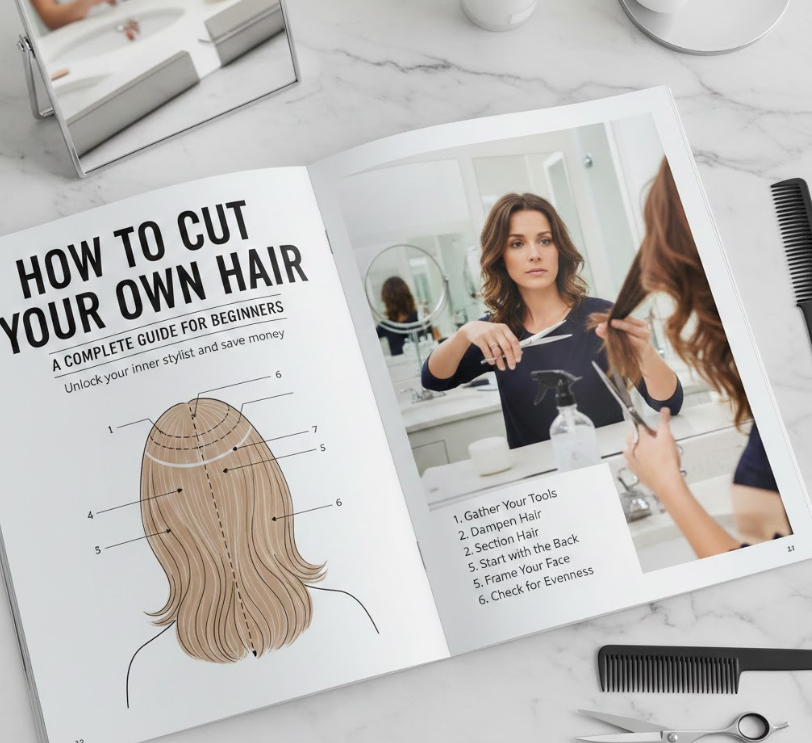
Cutting your own hair at home can be a convenient, cost-saving, and empowering skill. With proper technique, tools, and preparation, you can maintain your hairstyle without frequent salon visits. Learning how to cut your own hair ensures you achieve professional-looking results while reducing mistakes, especially during unpredictable times or for quick trims.
Haircuts influence personal style, confidence, and even professional appearance. According to American Academy of Dermatology, regular trimming helps maintain healthy hair, reduces split ends, and improves overall hair appearance. Knowing the right cutting methods, angles, and layering techniques allows anyone—from men to women—to manage hair length and style effectively at home.
This comprehensive guide covers:
- How to cut your own hair in layers
- How to cut your own hair men’s styles
- How to cut your own hair short
- How to cut your own hair step by step with pictures
Each section includes detailed instructions, expert tips, common mistakes, and safety precautions to help you master self-haircuts.
How to Cut Your Own Hair in Layers
Understanding Layered Haircuts
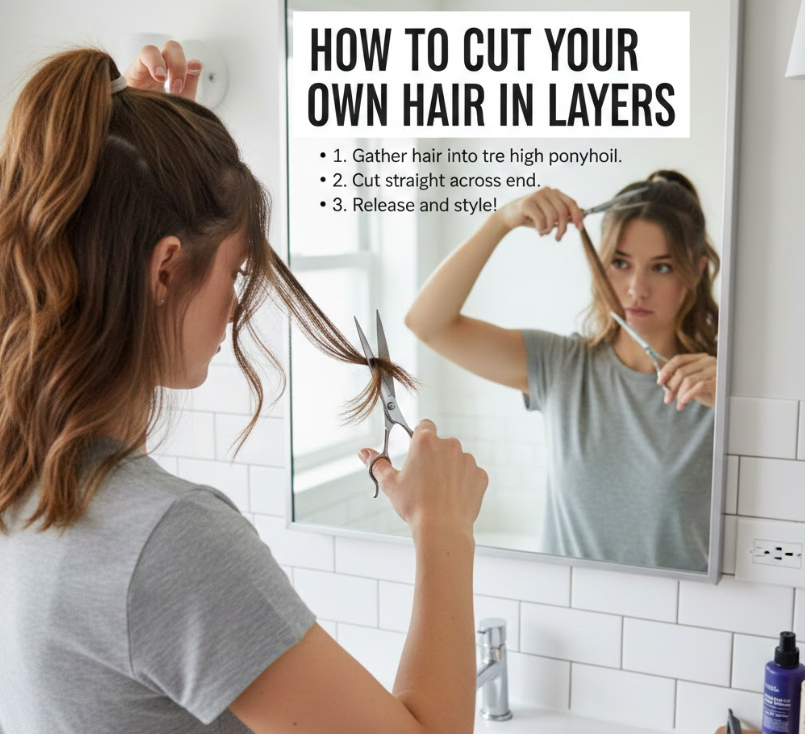
Layered haircuts involve cutting hair at different lengths to create volume, texture, and movement. Layering can enhance thin hair by adding fullness or give thick hair a lighter, more manageable look. Learning how to cut your own hair in layers allows for professional styling without visiting a salon and enables customized adjustments to your face shape and hair type.
Layered haircuts require careful sectioning, angle precision, and proper scissor techniques. Mistakes can result in uneven lengths or choppy layers, so following step-by-step guidelines is critical for achieving the desired look.
Key Steps for Layered Haircuts
. Prepare your hair properly
Wash, detangle, and dry your hair. Damp hair allows for more precise cutting, while dry hair shows natural fall and length.
. Section your hair carefully
Divide hair into top, middle, and bottom sections. Use clips to manage layers effectively.
. Decide layer length and angle
Determine where your layers will start and the angle of cutting. Steeper angles create shorter top layers and longer bottom layers.
. Use point-cutting technique
Point-cut ends rather than blunt-cutting for softer, more natural layers.
. Check symmetry frequently
Constantly compare sides to ensure balanced layers. Adjust as needed before finishing.
. Refine layers gradually
Make small adjustments rather than large cuts. Layering is easier to perfect incrementally.
Also Read:-How to Open a Can Without a Can Opener: The Ultimate Guide
How to Cut Your Own Hair Men

Men’s Haircut Basics
Men’s haircuts vary from short fades to medium-length styles. Cutting your own hair for men requires attention to clippers, combing techniques, and maintaining clean lines. Understanding how to cut your own hair men ensures a polished and even haircut, reducing the risk of patchy or uneven results.
Men’s self-haircuts often focus on short sides, blended fades, and controlled top lengths. Using the right tools and following structured approaches saves money and time while keeping a professional appearance.
Steps for Men’s Haircuts at Home
. Gather proper tools
Clippers with guards, scissors, combs, and mirrors are essential. Ensure tools are clean and sharp.
. Start with clean, dry hair
Wash and towel-dry hair to remove product residue. Dry hair shows length accurately for cutting.
. Choose the desired length
Select clipper guards for sides and back. Start with longer guards to avoid over-cutting.
. Trim sides and back first
Use clippers to achieve even length. Blend top hair gradually to avoid harsh lines.
. Trim the top with scissors
Comb sections and cut small amounts for controlled layering.
. Check symmetry and clean edges
Use mirrors to inspect sides and back. Trim uneven areas carefully.
Also Read:- How to Bake a Cake: The Ultimate Step-by-Step Guide for Perfect Results Every Time
How to Cut Your Own Hair Short
Benefits of Short Haircuts
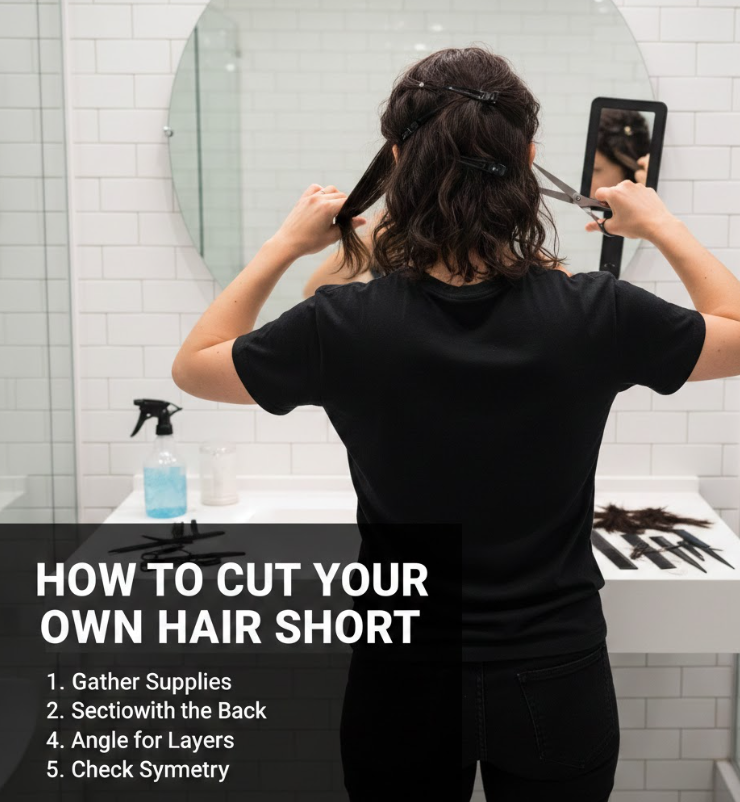
Short haircuts are low-maintenance, versatile, and ideal for hot climates. Learning how to cut your own hair short allows you to maintain cropped styles, pixie cuts, or bob lengths without frequent salon visits. Short haircuts require precision, especially around the edges and back, to maintain shape and symmetry.
Short haircuts highlight facial features and can be styled in multiple ways with minimal effort. Proper techniques prevent uneven lengths, jagged edges, or overly short sections.
Steps to Cut Hair Short
. Decide on your desired length
Use clips or combs to measure length. Mark reference points for uniform cutting.
. Section hair strategically
Divide hair into manageable segments. Focus on one section at a time.
. Start cutting from the back
Begin at the nape and work upward. Keep consistent length across all sections.
. Trim sides and front gradually
Cut in small increments to avoid removing too much hair. Check balance frequently.
. Refine edges and layers
Use point-cutting or scissors over comb for soft edges.
. Check for evenness and finish style
Inspect hair from all angles. Adjust as needed for uniform short style.
Also Read:- How to Fix a Zipper: The Complete Guide for Every Clothing and Bag Issue
How to Cut Your Own Hair Step by Step Pictures
Visual Guidance Importance
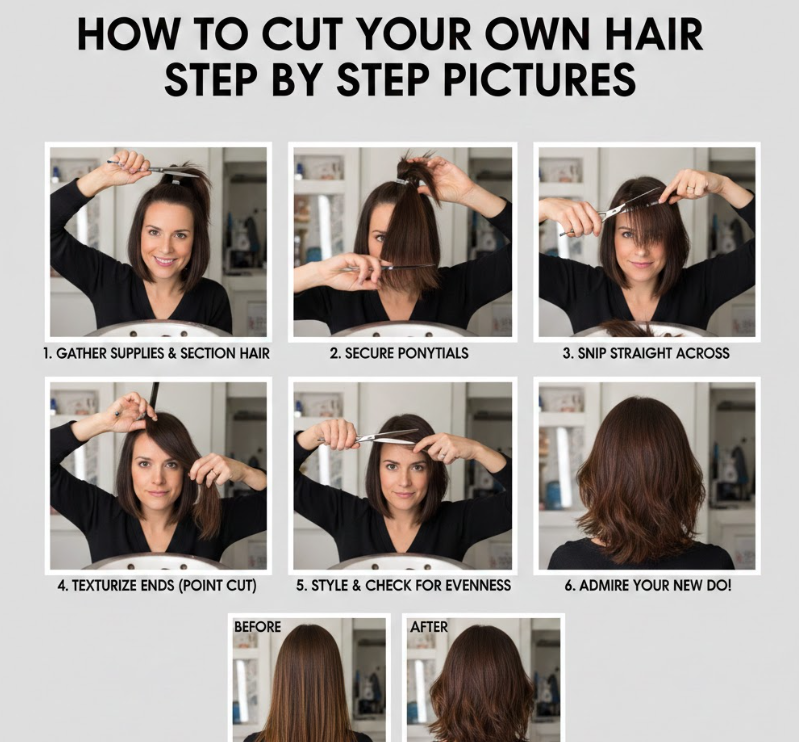
Step-by-step pictures provide clear, visual instructions for self-haircuts. Learning how to cut your own hair step by step pictures helps beginners understand sectioning, angles, and cutting techniques. Visual aids reduce mistakes, increase confidence, and ensure better outcomes.
Picture-guided tutorials allow real-time comparison and help you follow professional methods without relying solely on text descriptions.
Using Step-by-Step Visual Guides
. Select a trusted visual tutorial
Look for professional hairdresser guides or instructional videos.
. Follow sectional diagrams
Picture guides show where to divide hair for layered, short, or men’s cuts.
. Understand cutting angles
Images demonstrate scissors or clippers positioning for accurate cuts.
. Compare progress with reference images
Regularly check your work against step-by-step images to avoid mistakes.
. Follow finishing touches visually
Pictures guide point-cutting, trimming edges, and blending layers effectively.
. Use multiple perspectives
Top, side, and back views in images ensure all areas are cut evenly.
Tools You’ll Need to Cut Hair at Home
. Sharp hair-cutting scissors – for clean, precise cuts.
. Hair clippers and guards – ideal for men’s cuts and short styles.
. Fine-tooth and wide-tooth combs – for sectioning and detangling.
. Clips and hair ties – to manage sections.
. Mirrors – preferably three-way mirrors for angles.
. Cape or towel – to keep hair off clothing.
Safety and Common Mistakes
. Don’t cut wet hair too short – dry hair shows actual length.
. Avoid rushing – slow cuts prevent mistakes.
. Check symmetry constantly – ensures even hair length.
. Use proper scissors – household scissors can damage hair.
. Trim in small sections – large cuts are harder to correct.
. Maintain clean tools – prevents hair damage and infections.
Also Read:- How to File a Tax Extension: Complete Guide for Individuals and Businesses
Conclusion
Learning how to cut your own hair empowers you to maintain hairstyles, save money, and experiment with different looks safely at home. Whether you’re layering, cutting short, or following step-by-step visual guides, preparation, the right tools, and patience are key to professional-looking results. By following the methods outlined here, you can master self-haircuts while avoiding common mistakes and maintaining healthy, stylish hair.
FAQs
Can I cut my own hair without making mistakes?
Yes, by following step-by-step guides, using proper tools, and trimming gradually.
How often should I trim hair at home?
Every 4–8 weeks for maintenance, depending on style and hair growth.
Are home haircuts safe for layered styles?
Yes, if done carefully with sectioning and point-cutting techniques.
What if I make a mistake?
Trim gradually and evenly to fix small errors; consider a professional for major corrections.
For More Visit Alaikas.com