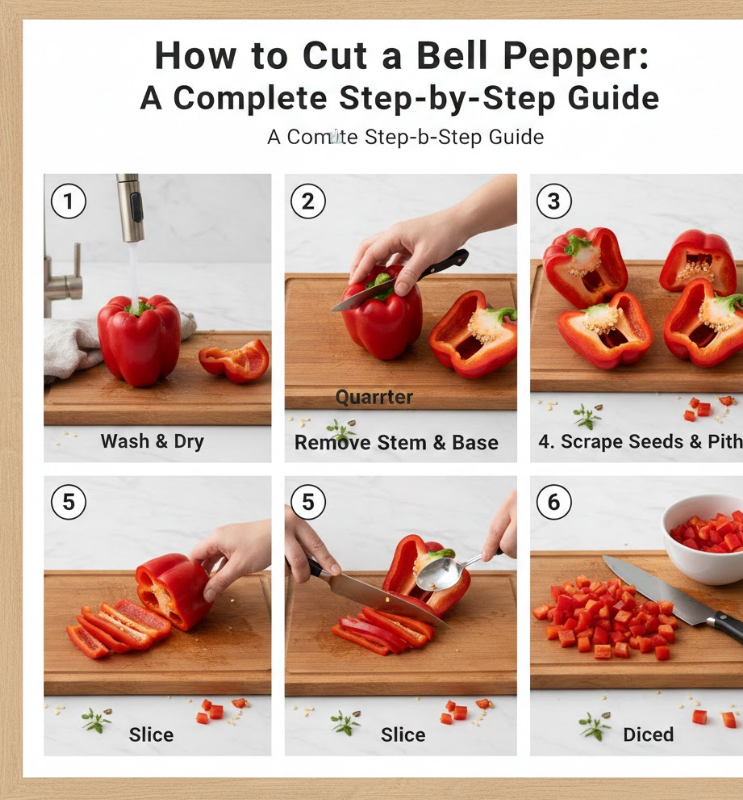
Learning how to cut a bell pepper properly is a foundational kitchen skill that improves speed, safety, presentation, and flavor consistency across countless recipes. Bell peppers are one of the most versatile vegetables used in home cooking and professional kitchens alike. From stir-fries and salads to kabobs, fajitas, and meal prep bowls, how you cut a bell pepper directly impacts cooking time, texture, and visual appeal.
Despite their simplicity, bell peppers are often cut inefficiently, leading to wasted flesh, uneven pieces, or dangerous knife handling. This guide is built from real culinary experience, food-safety best practices, and professional knife techniques to give you a trustworthy, repeatable system. Whether you are a beginner or a home cook looking to level up, mastering how to cut a bell pepper will make your cooking faster, cleaner, and more professional.
Throughout this article, you’ll learn multiple cutting styles, chef hacks, safety tips, and use-case specific techniques—without unnecessary complexity.
Understanding Bell Pepper Anatomy Before Cutting
A bell pepper has four key parts: the stem, ribs (white membrane), seeds, outer flesh, and base. Understanding this structure helps reduce waste and speeds up cutting.
The seeds and ribs are bitter and should be removed. The outer flesh is crisp, sweet, and ideal for slicing, dicing, or grilling. Proper cutting techniques focus on separating these parts efficiently while keeping your knife movements controlled and safe.
How to Cut a Bell Pepper Step by Step
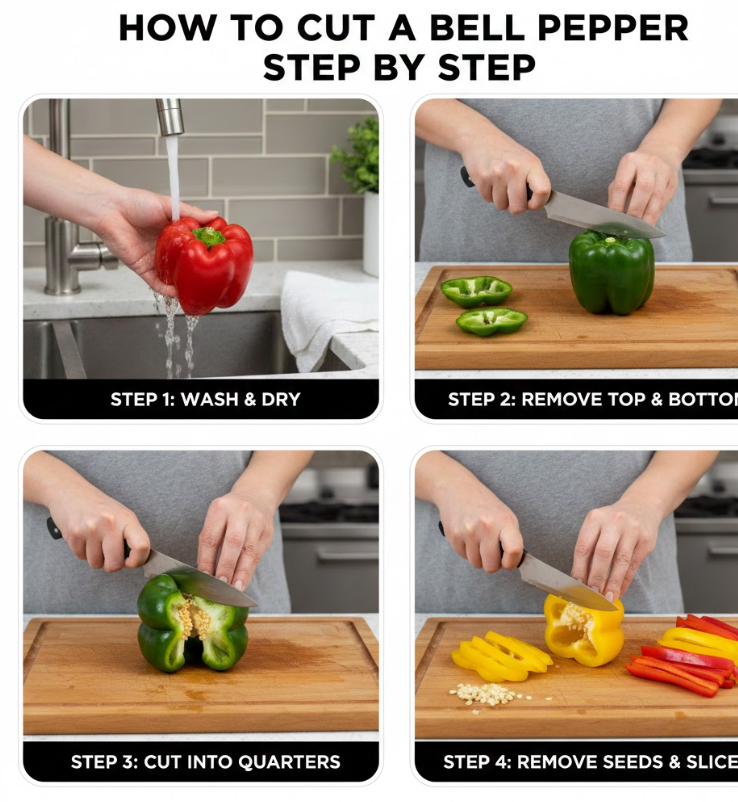
This foundational method forms the basis for all other bell pepper cutting styles.
Step-by-Step Explanation
Cutting a bell pepper step by step ensures clean pieces, minimal waste, and safe knife handling. This method is widely taught in culinary schools and professional kitchens.
• Wash and dry the bell pepper thoroughly
Removing surface dirt and bacteria prevents contamination and ensures better grip during cutting.
• Slice off the top and bottom cleanly
This exposes the inner core and creates a stable base for safe cutting.
• Stand the pepper upright and slice down the sides
Follow the natural curve to remove flesh panels without cutting through seeds.
• Discard seeds and inner ribs completely
Removing bitter membranes improves flavor and texture.
• Lay panels flat skin-side down
This stabilizes the pepper for precise slicing.
• Cut into desired shapes evenly
Uniform size ensures even cooking and better presentation.
This method minimizes mess, improves safety, and works for strips, dice, or specialty cuts.
Also Read:- How Long Does It Take for Paint to Dry: A Complete Guide for Every Surface
How to Cut a Bell Pepper Into Strips
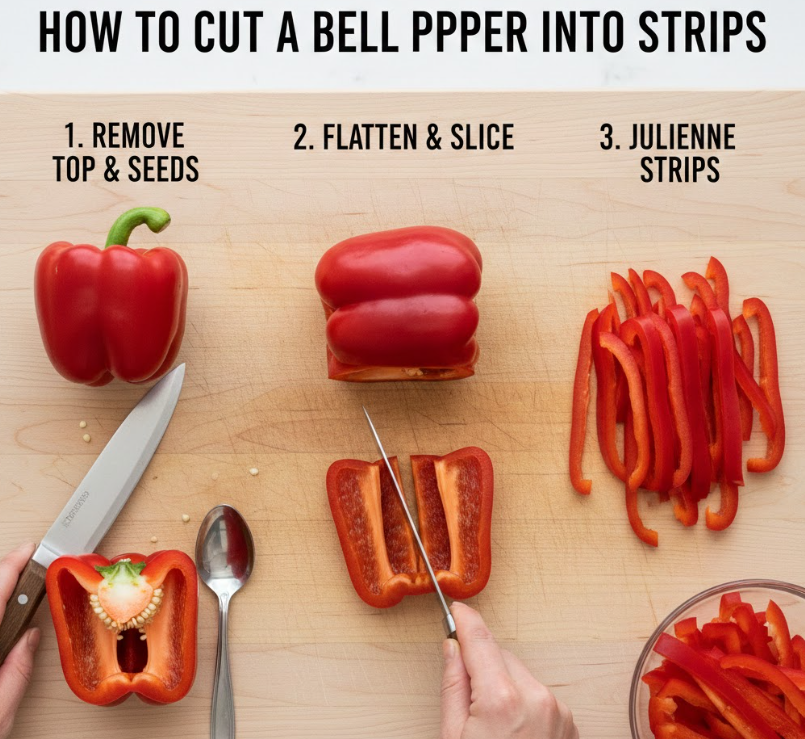
Bell pepper strips are commonly used for fajitas, stir-fries, salads, and meal prep because they cook evenly and look visually appealing.
Detailed Explanation
Cutting bell peppers into strips requires consistent knife pressure and attention to width. Uniform strips ensure even sautéing and prevent overcooking.
• Flatten pepper panels before slicing
A flat surface prevents slipping and promotes accuracy.
• Use a sharp chef’s knife
A sharp blade reduces crushing and preserves crisp texture.
• Cut lengthwise for longer strips
This creates restaurant-style presentation.
• Maintain consistent width
Even strips cook at the same rate.
• Adjust thickness for recipe needs
Thinner strips work best for quick cooking; thicker strips for grilling.
• Group and align pieces before cutting
This speeds up prep while maintaining precision.
Bell pepper strips are ideal for both hot and cold dishes due to their structure and crunch.
Also Read:- Alaikas.com: Your Go-To Hub for General News and Information
How to Cut a Bell Pepper Like a Chef
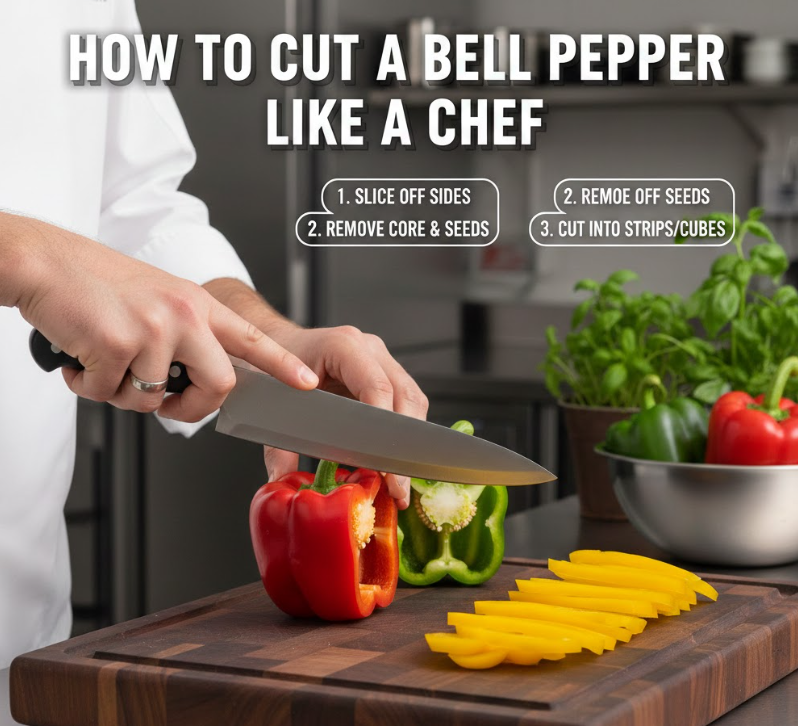
Professional chefs prioritize efficiency, safety, and minimal waste when cutting bell peppers.
Chef Technique Explained
Chef-style cutting focuses on clean movements, controlled knife angles, and intentional hand positioning. This approach reduces prep time without sacrificing precision.
• Use the claw grip for safety
Tucking fingertips protects against cuts.
• Let the knife do the work
Avoid forcing downward pressure.
• Cut away from the seed core
This eliminates unnecessary cleanup.
• Rotate the pepper, not the knife
Improves control and accuracy.
• Work with the pepper’s natural shape
Reduces trimming waste.
• Keep cuts purposeful and deliberate
Efficiency comes from consistency, not speed.
Chef techniques are about control and repetition, not rushing.
How to Cut a Bell Pepper Hack (Waste-Free Method)
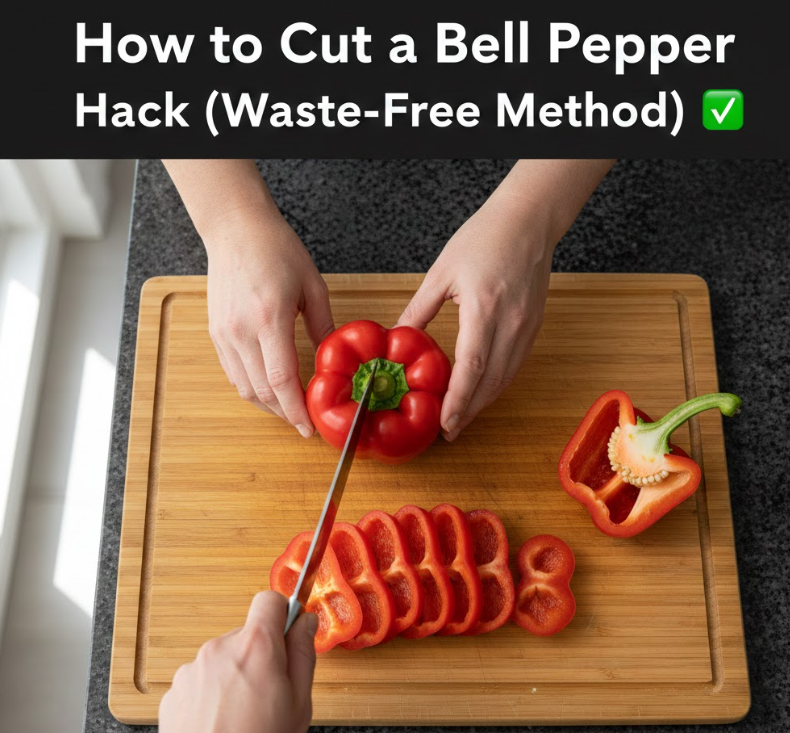
This popular bell pepper hack reduces waste and speeds up preparation.
Hack Method Explained
The hack involves removing the core in one motion, making it ideal for fast meal prep.
• Slice off the top near the stem
Expose the seed cluster.
• Pull out the core using fingers or knife tip
Seeds come out in one piece.
• Tap out remaining seeds gently
Avoid rinsing unless necessary.
• Slice the hollow pepper in half
Creates manageable sections.
• Flatten and cut as needed
Adapt for strips, dice, or chunks.
• Save scraps for stock or stir-fries
Minimize food waste.
This method is fast, efficient, and beginner-friendly.
How to Cut a Bell Pepper for Kabobs
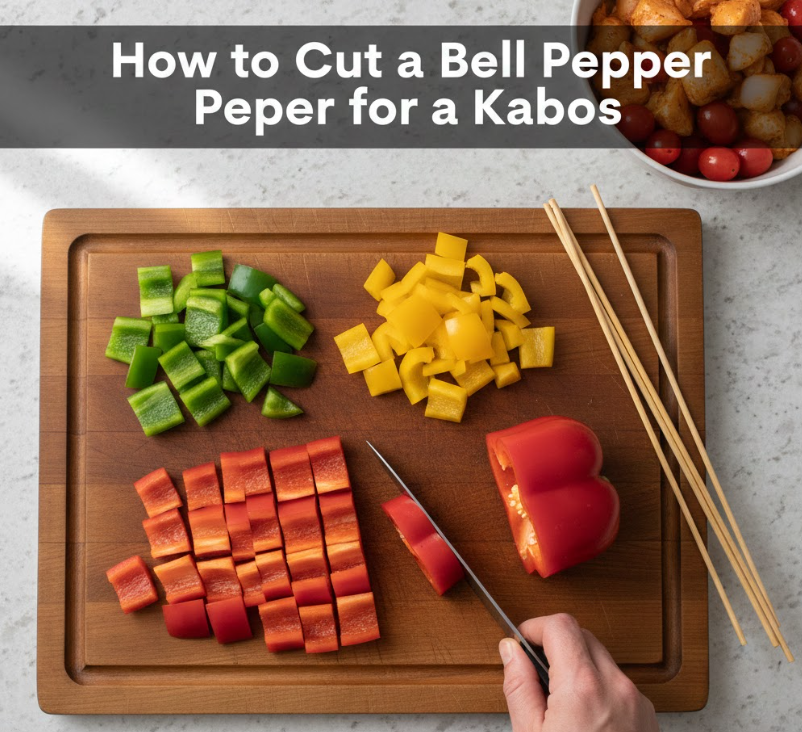
Kabobs require sturdy, evenly sized bell pepper pieces that hold their shape on skewers.
Kabob-Specific Cutting Technique
Bell peppers for kabobs should be large enough to grill without falling apart.
• Remove core and ribs completely
Prevents bitterness during grilling.
• Cut panels into large squares
Ideal for skewering.
• Match size with protein pieces
Ensures even cooking.
• Avoid thin strips
They burn easily over direct heat.
• Keep edges clean and straight
Improves appearance.
• Oil lightly before skewering
Prevents sticking and enhances browning.
Kabob-cut peppers add sweetness, color, and structure to grilled dishes.
Knife Safety Tips When Cutting Bell Peppers
Safe cutting practices protect your hands and improve precision.
• Always stabilize the cutting board
• Keep the blade sharp
• Use the claw grip
• Cut on dry surfaces
• Avoid rushing
• Store knives properly
Knife safety is essential for consistent, confident cooking.
Nutritional Benefits of Bell Peppers (Why Cutting Matters)
Bell peppers are rich in vitamin C, antioxidants, and fiber. Proper cutting preserves nutrients by reducing unnecessary exposure to water and air.
Studies show that minimal handling and quick prep help retain vitamin C content, especially in raw preparations.
Conclusion: Mastering How to Cut a Bell Pepper
Mastering how to cut a bell pepper is a small skill with a big impact. It improves safety, reduces waste, enhances presentation, and ensures even cooking. Whether you’re slicing strips, preparing kabobs, or using chef-level techniques, the key lies in understanding structure, using the right knife, and cutting with intention.
With consistent practice, these techniques become second nature—making every meal faster, cleaner, and more enjoyable.
FAQs: How to Cut a Bell Pepper
Do I need to peel a bell pepper before cutting?
No, the skin is edible and adds texture and nutrients.
What’s the safest knife for beginners?
A sharp 8-inch chef’s knife offers control and versatility.
Can I cut bell peppers ahead of time?
Yes, store in an airtight container for up to 3–4 days.
Why remove the white ribs?
They are bitter and affect flavor balance.
Are different colored peppers cut differently?
No, the cutting method is the same for all colors.
For More Visit Alaikas.com