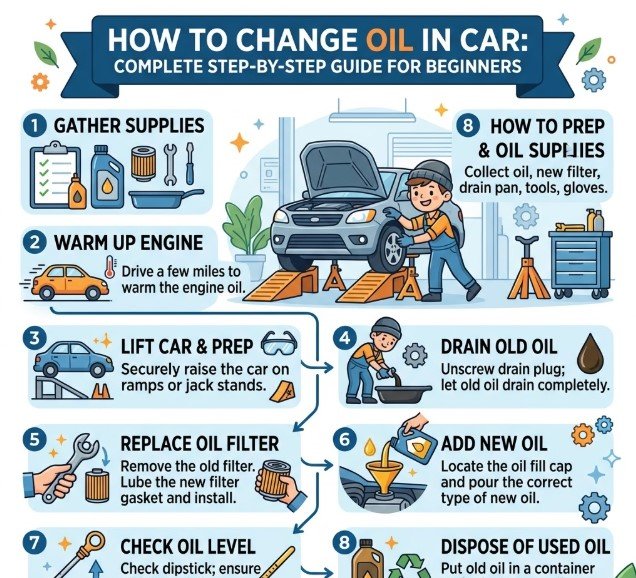
Learning how to change oil in car is one of the most valuable skills every vehicle owner should have. Regular oil changes are essential for maintaining engine performance, improving fuel efficiency, and extending the lifespan of your car. Engine oil acts as a lubricant that reduces friction, prevents overheating, and keeps internal components clean. Without timely oil changes, engines can suffer from wear, sludge buildup, and costly damage.
In this comprehensive guide, you’ll not only learn how to change oil, but also understand oil filters, oil types, and variations for different machines like lawn mowers and diesel trucks. Whether you’re a beginner or someone looking to refine your maintenance skills, this guide provides detailed, actionable steps supported by expert insights and best practices.
How to Change Oil in Car (Complete Guide)
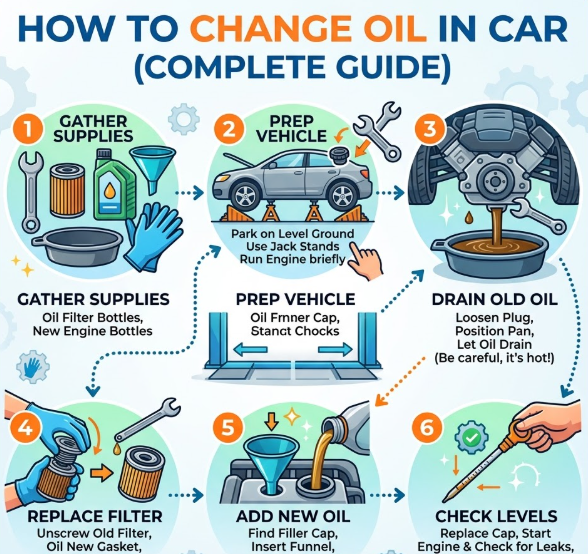
• Prepare the Tools and Materials Properly
Before starting, gather all necessary tools including a wrench, oil filter, oil pan, funnel, and the correct grade of engine oil. Preparation ensures a smooth and safe process without interruptions. Choosing the right oil type (synthetic or conventional) based on your vehicle’s requirements is critical for optimal engine performance.
• Warm Up the Engine Slightly
Run the engine for a few minutes before draining the oil, as warm oil flows more easily and carries more contaminants out. However, avoid overheating the engine, as extremely hot oil can cause burns. A slightly warm engine ensures efficient oil drainage and better results.
• Drain the Old Engine Oil Safely
Locate the oil drain plug under the car and carefully remove it using a wrench. Allow the old oil to completely drain into a pan. This step removes impurities, sludge, and debris accumulated over time, which can otherwise damage the engine components.
• Replace the Oil Filter Efficiently
The oil filter traps contaminants, so replacing it is essential during every oil change. Use an oil filter wrench to remove the old filter and install a new one. Lightly oil the rubber gasket before installation to ensure a tight seal and prevent leaks.
• Add New Engine Oil Carefully
Using a funnel, pour the recommended amount of new oil into the engine. Check the owner’s manual for exact specifications. Overfilling or underfilling can negatively impact engine performance, so accuracy is important.
• Check Oil Level and Test the Engine
After filling, use the dipstick to check the oil level and adjust if necessary. Start the engine and let it run for a few minutes, then check for leaks. This final step ensures everything is functioning correctly and safely.
Also Read:- How to Make at Home: Complete Guide to Easy DIY Recipes
How to Change Oil Filter

• Locate the Oil Filter Easily
The oil filter is typically located near the engine block. Its position may vary depending on the car model. Identifying it correctly prevents unnecessary complications and ensures efficient replacement during the oil change process.
• Remove the Old Oil Filter Carefully
Use a filter wrench to loosen and remove the filter. Be prepared for some oil spillage. Removing the old filter properly ensures that no contaminants remain inside the engine system.
• Prepare the New Oil Filter
Before installation, apply a thin layer of fresh oil to the rubber gasket. This helps create a proper seal and makes future removal easier. It also prevents leaks and improves performance.
• Install the New Filter Properly
Screw the new filter in place by hand until snug. Avoid over-tightening, as it may damage the gasket. Proper installation ensures durability and prevents oil leakage during engine operation.
• Check for Leaks After Installation
Once installed, start the engine and observe the filter area. Ensuring no leaks occur is essential for safe driving and maintaining engine health.
• Dispose of Old Filter Responsibly
Used filters contain oil and contaminants, so dispose of them at recycling centers. Proper disposal helps protect the environment and complies with regulations.
Also Read:- How to Meal Prep Smoothies: The Ultimate Guide for Easy, Healthy Living
How to Change Oil (General Process)
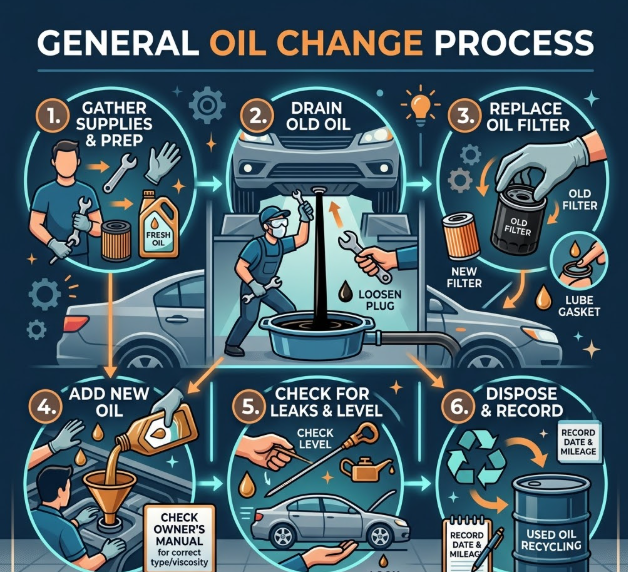
• Understand Oil Types and Grades
Different engines require different oil viscosities such as 5W-30 or 10W-40. Using the correct type ensures optimal lubrication and performance. Incorrect oil can lead to engine damage or reduced efficiency.
• Use Proper Safety Measures
Always wear gloves and safety glasses while changing oil. This protects against burns and chemical exposure. Safety precautions are essential for a smooth maintenance experience.
• Follow Manufacturer Guidelines
Each vehicle or machine has specific oil change intervals and requirements. Following the manual ensures proper maintenance and prevents unnecessary issues.
• Monitor Oil Condition Regularly
Checking oil color and consistency helps determine when it needs changing. Dark or dirty oil indicates contamination and reduced effectiveness.
• Avoid Overfilling the Engine
Adding too much oil can cause pressure buildup and leaks. Always measure carefully to maintain balance and avoid engine problems.
• Maintain a Regular Schedule
Routine oil changes every 5,000–10,000 km improve engine lifespan. Consistency is key to maintaining performance and preventing breakdowns.
Also Read:- How to Wash a Car: The Complete Step-by-Step Car Cleaning Guide
How to Change Oil in Lawn Mower
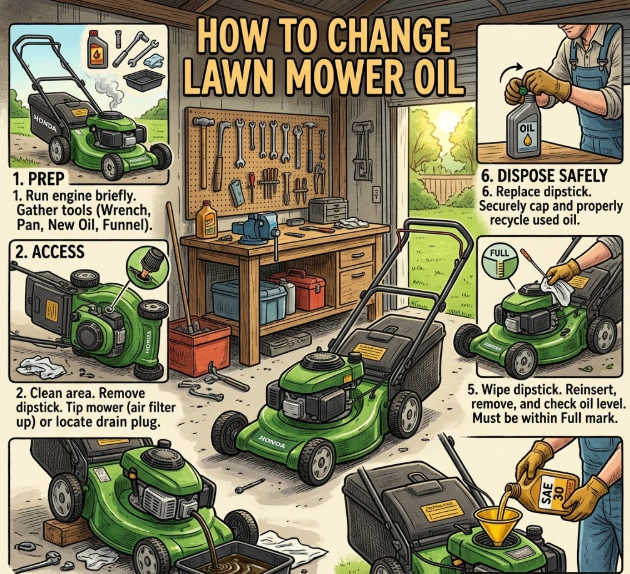
• Turn Off and Cool the Engine
Always ensure the mower is turned off and cooled before starting. This prevents accidents and ensures safe handling during maintenance.
• Drain Old Oil Properly
Tilt the mower or use a drain plug to remove old oil. Proper drainage removes dirt and debris that affect engine performance.
• Clean the Oil Fill Area
Before adding new oil, clean the area to prevent contamination. This ensures the new oil remains clean and effective.
• Add Fresh Oil Carefully
Pour the correct type and amount of oil as specified in the manual. Using the wrong oil can damage the engine.
• Check Oil Level Accurately
Use the dipstick to ensure proper oil levels. Maintaining correct levels ensures smooth operation and prevents engine strain.
• Test the Mower After Change
Run the mower briefly to ensure everything is working correctly. This confirms a successful oil change process.
Also Read:- How to Pack a Suitcase: The Complete Smart Packing Guide
How to Change Oil Pressure Sensor
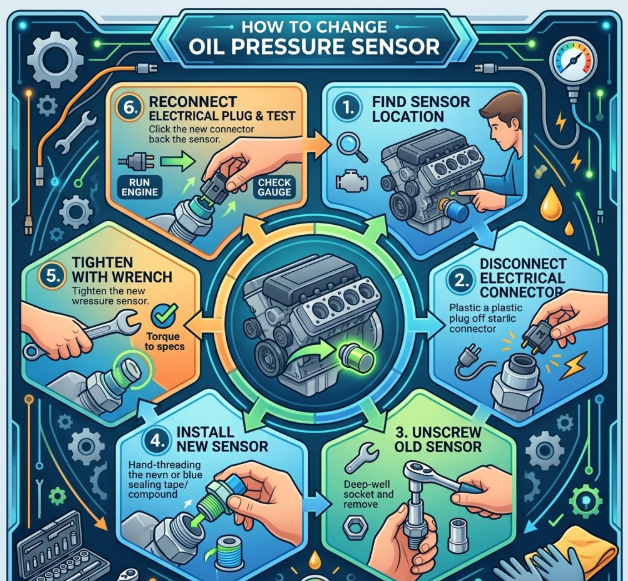
• Locate the Sensor Precisely
The sensor is usually near the engine block. Identifying it correctly is crucial for proper replacement.
• Disconnect Battery Before Work
Safety is essential, so disconnect the battery to prevent electrical issues. This step ensures a secure working environment.
• Remove the Faulty Sensor
Use appropriate tools to remove the old sensor. Proper removal avoids damage to surrounding components.
• Install the New Sensor Carefully
Place the new sensor securely and tighten it properly. Ensuring correct installation prevents leaks and faulty readings.
• Reconnect Electrical Connections
Attach wiring securely to ensure accurate sensor performance. Proper connections are essential for functionality.
• Test the System After Replacement
Start the engine and check for proper readings. This confirms successful installation and operation.
Also Read:- How to Wash Pillows: The Complete Guide to Clean, Fresh, and Fluffy Bedding
How to Change Oil in Push Mower
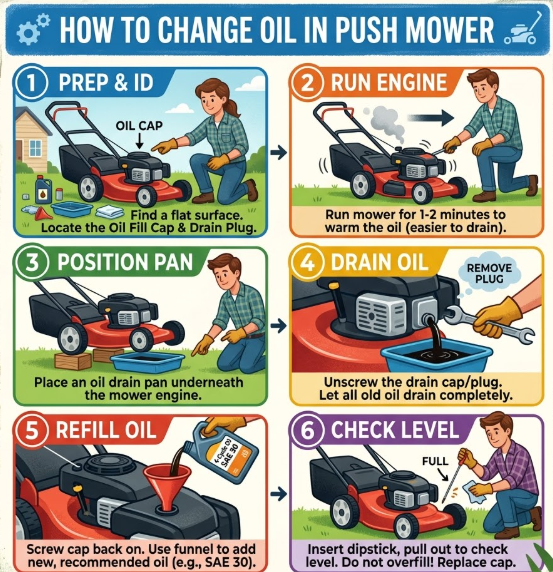
• Prepare the Equipment Safely
Ensure the mower is stable and turned off before starting. Safety preparation prevents accidents.
• Drain the Old Oil Completely
Removing old oil eliminates contaminants and improves engine efficiency.
• Clean Components Before Refilling
Keeping parts clean ensures new oil remains uncontaminated.
• Refill with Recommended Oil Type
Using the correct oil improves performance and prevents damage.
• Check Levels Using Dipstick
Maintaining proper levels ensures smooth operation.
• Run Engine to Confirm Success
Testing ensures the oil change process was done correctly.
Also Read:- How to Draw a Body – Complete Step-by-Step Guide for Beginners and Artists
How to Change Oil in Diesel Truck
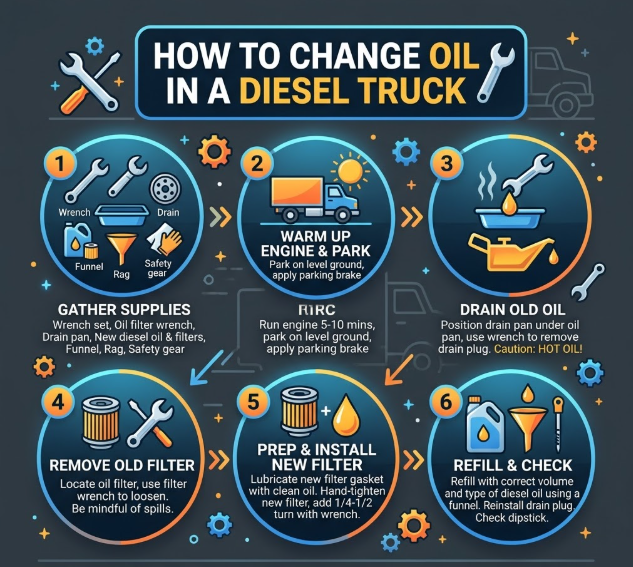
• Use Heavy-Duty Engine Oil
Diesel engines require specialized oil for high performance and durability.
• Drain Oil Thoroughly
Complete drainage ensures removal of contaminants.
• Replace Large Oil Filter
Diesel filters are larger and must be replaced carefully.
• Refill with Correct Quantity
Diesel engines require more oil than regular cars.
• Inspect for Leaks and Issues
Checking ensures proper functioning and safety.
• Follow Maintenance Schedule Strictly
Regular changes are critical for diesel engine health.
Also Read:- How to Put Air in Tires: The Complete Step-by-Step Guide for Safe and Proper Inflation
Conclusion
Understanding how to change oil in car and other machines empowers you to maintain your vehicles effectively while saving money. Regular oil changes improve engine performance, increase fuel efficiency, and extend the life of your engine. Whether you’re working on a car, lawn mower, or diesel truck, the principles remain consistent: use the right oil, follow proper steps, and maintain a regular schedule.
FAQs
How often should I change car oil?
Typically every 5,000–10,000 km depending on oil type and driving conditions.
Can I change oil without changing the filter?
It is not recommended, as the filter holds contaminants.
What happens if I don’t change oil?
Engine damage, overheating, and reduced performance can occur.
Is synthetic oil better?
Yes, it offers better performance and longer intervals.
How long does an oil change take?
Usually 30–60 minutes for most vehicles.
For More Visit Alaikas.com