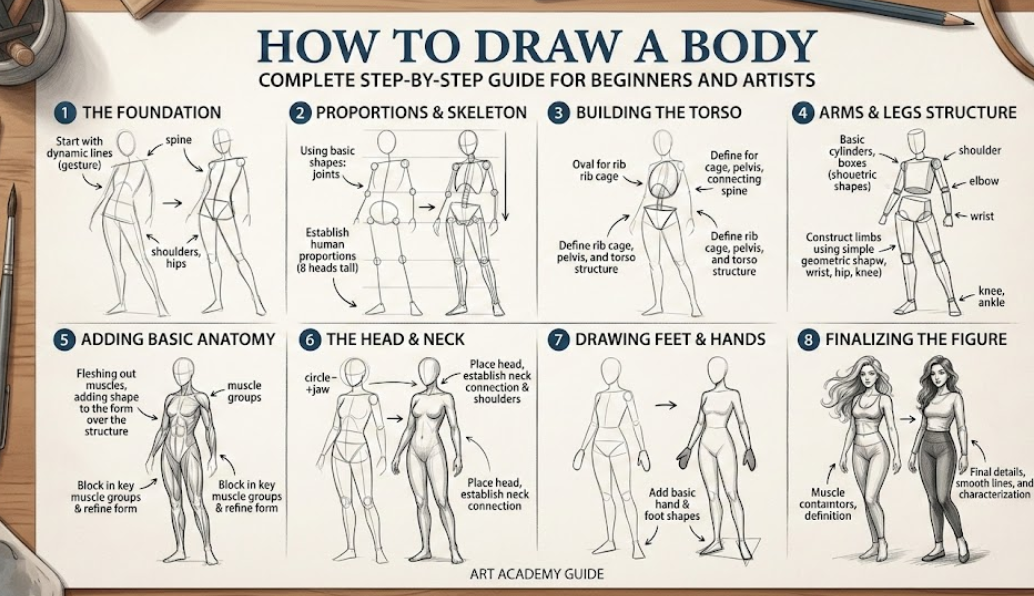
Learning how to draw a body is one of the most important skills for any artist, whether you’re interested in realism, comic art, fashion illustration, or character design. The human figure is dynamic, expressive, and complex. Understanding anatomy, proportions, gesture, and structure allows you to create believable and balanced drawings.
Renowned art institutions such as the Rhode Island School of Design and Parsons School of Design emphasize figure drawing as a foundational skill in visual arts education. Professional artists study skeletal structure, muscle anatomy, and proportion systems before refining details. Whether you’re a beginner or improving your skills, mastering how to draw a body step by step requires practice, observation, and structured techniques.
In this comprehensive guide, you’ll learn how to draw a body female, how to draw a body male, how to draw a body easy, and how to draw a body with clothes. Each section includes detailed explanations, six structured build points, and practical insights to help you develop confident figure drawing skills.
Understanding Human Body Proportions Before You Draw
Before diving into specific styles, understanding proportion is essential. The average adult human body is approximately 7.5 to 8 heads tall in realistic drawing. Artists often use simplified measurement systems to maintain balance and symmetry.
Core Proportion Principles
• Head-to-Body Ratio System
Artists use the head as a measurement unit. In realistic figure drawing, the body is divided into equal head-length segments to maintain anatomical accuracy.
• Shoulder and Hip Alignment
The shoulders typically align with the second head mark, while hips sit around the fourth head mark. This alignment ensures structural balance.
• Torso Division
The ribcage and pelvis form two main masses. Understanding their tilt and relationship creates natural posture.
• Arm Length Guidelines
When relaxed, fingertips reach mid-thigh. Elbows align with the waistline.
• Leg Proportions
The legs usually account for half the body’s total height.
• Symmetry vs Natural Variation
While guidelines help, real bodies vary in size, shape, and posture. Observational drawing refines accuracy.
Mastering these fundamentals builds the foundation for drawing male, female, and stylized figures effectively.
Also Read:- How to Put Air in Tires: The Complete Step-by-Step Guide for Safe and Proper Inflation
How to Draw a Body Female – Step-by-Step Structure
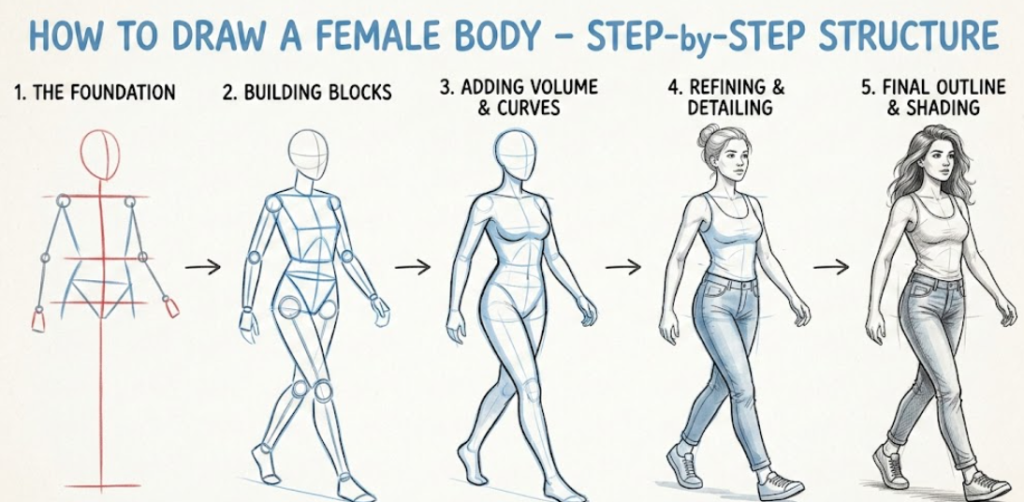
When learning how to draw a body female, focus on proportion differences, curves, and skeletal structure. Female anatomy typically features narrower shoulders, wider hips, and softer muscle definition compared to male anatomy.
Structured Approach for Drawing a Female Body
• Start with Gesture Drawing
Sketch a loose action line to capture movement and balance before adding structure.
• Define the Ribcage and Pelvis
Use oval shapes to represent these masses. The pelvis is generally wider in female anatomy.
• Shape the Waist and Hips
Create a gentle inward curve at the waist and outward curve at the hips to reflect natural proportions.
• Draw Limbs with Soft Contours
Female arms and legs often appear smoother with less pronounced muscle definition.
• Refine the Neck and Shoulders
Shoulders are typically slightly narrower than hips in many body types.
• Adjust for Body Diversity
Avoid stereotypes. Bodies vary in size, height, and shape.
Observing real references and practicing regularly improves your ability to draw a body female naturally and respectfully.
Also Read:- How to Find Y Intercept: A Complete Step-by-Step Guide for Students
How to Draw a Body Male – Building Strong Structure
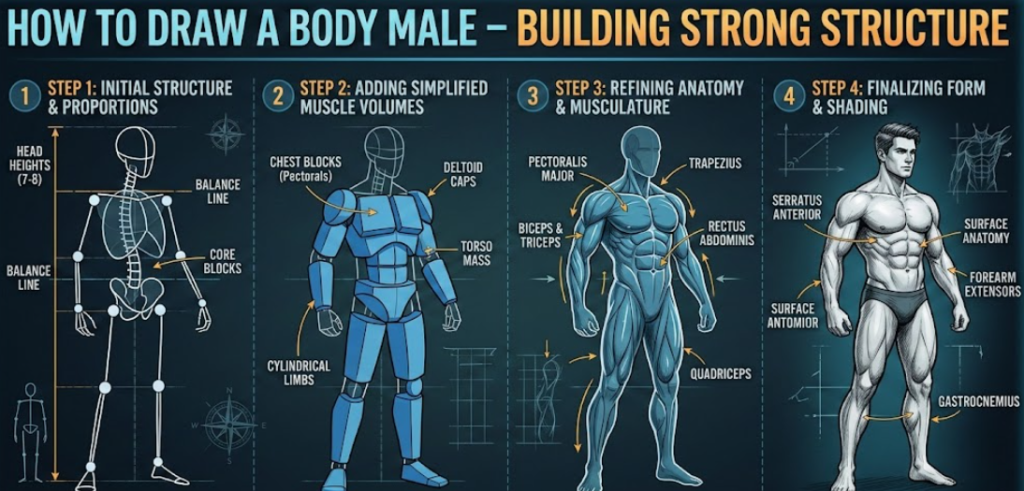
Understanding how to draw a body male requires attention to broader shoulders, defined musculature, and angular features.
Structured Steps for Drawing a Male Body
• Gesture First, Structure Second
Capture dynamic posture before outlining anatomy.
• Broader Shoulder Width
In many male proportions, shoulders extend wider than hips.
• Define Chest and Ribcage
The chest mass may appear more rectangular.
• Indicate Muscle Groups Subtly
Highlight pectorals, deltoids, and quadriceps without over-detailing.
• Stronger Jaw and Neck Base
The neck often appears thicker and more muscular.
• Balance Weight Distribution
Ensure both legs support posture naturally.
Study anatomy books and figure drawing references for improved realism.
Also Read:- How to Print from iPhone: The Ultimate Guide for Beginners
How to Draw a Body Easy – Beginner-Friendly Method
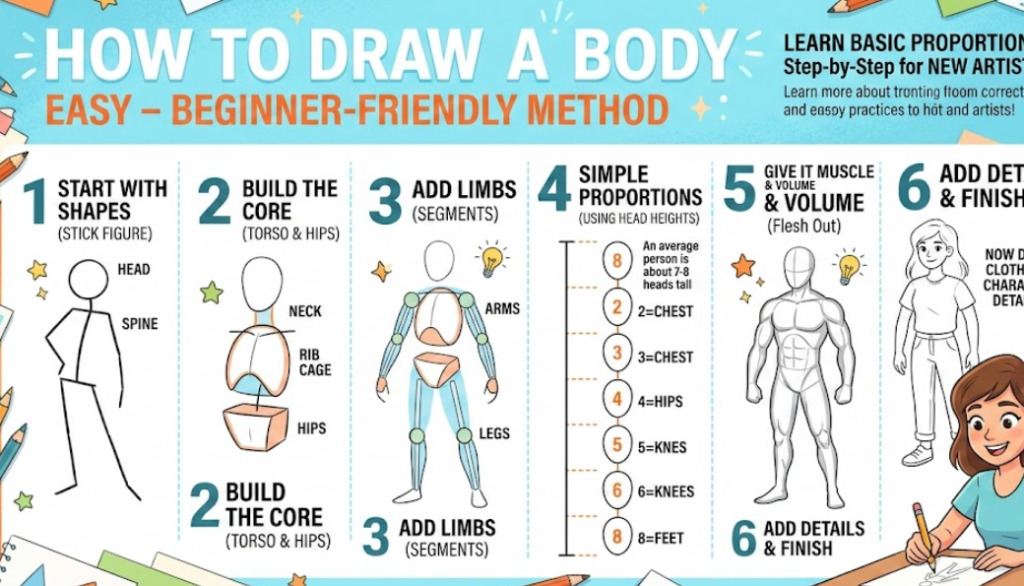
If you’re new to figure drawing, learning how to draw a body easy helps build confidence before refining advanced details.
Simplified Beginner Framework
• Use Stick Figures First
Start with lines for spine, arms, and legs to understand pose.
• Add Basic Shapes
Circles for joints, ovals for torso and pelvis.
• Connect the Forms
Transform lines into cylinders for limbs.
• Focus on Proportion Over Detail
Keep forms simple before adding muscles.
• Practice Static Poses
Standing positions are easier than dynamic motion.
• Use References
Observe photos or life drawing sessions.
This method reduces overwhelm and strengthens structural understanding.
Also Read:- How to Turn On Apple Watch: Complete Step-by-Step Guide (All Models)
How to Draw a Body with Clothes – Adding Realism
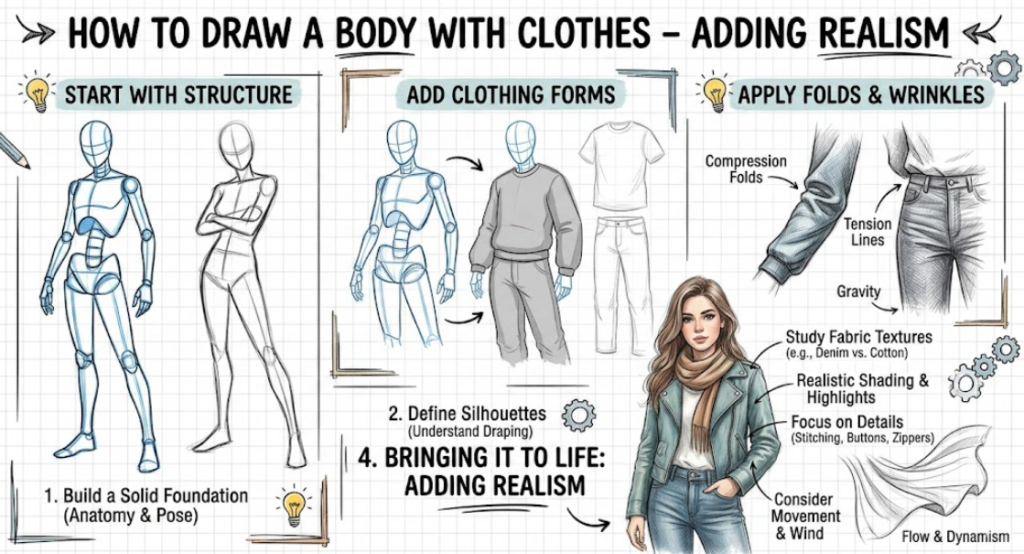
Clothing follows the structure of the body beneath it. Understanding how to draw a body with clothes requires knowledge of fabric behavior and folds.
Clothing Drawing Techniques
• Draw the Body First
Never skip the underlying structure.
• Understand Fabric Tension Points
Wrinkles form around elbows, shoulders, and waist.
• Observe Gravity’s Effect
Loose fabric hangs naturally downward.
• Indicate Layering
Jackets and shirts create overlapping forms.
• Study Material Types
Denim folds differently than silk.
• Add Shadows for Depth
Shading enhances realism.
Clothing drawing becomes easier once body structure is mastered.
Also Read:- How to Make a Sticker on iPhone: The Complete 2026 Guide
Tools and Practice Methods for Improving Figure Drawing
Professional artists use sketchbooks, graphite pencils, and digital tablets. Programs like Procreate and Adobe Photoshop are popular for digital art practice.
Practice Strategies
• Daily gesture sketches (5–10 minutes).
• Study anatomy references.
• Practice timed poses.
• Draw from life when possible.
• Analyze proportions critically.
• Review and refine past sketches.
Consistency accelerates progress significantly.
Also Read:- How to Draw a Car: The Complete Step-by-Step Drawing Guide for Beginners and Kids
Conclusion
Mastering how to draw a body takes patience, observation, and structured practice. Start with proportions, refine structure, practice gesture drawing, and gradually add detail. Whether you’re learning how to draw a body female, male, easy, or with clothes, the key is consistent repetition and anatomical awareness.
Focus on understanding form rather than memorizing outlines. Study real references, experiment with styles, and build your confidence step by step.
FAQs
How long does it take to learn figure drawing?
With daily practice, noticeable improvement can occur within weeks, but mastery takes years.
Should beginners study anatomy?
Yes, even basic skeletal knowledge improves proportion accuracy.
Is digital drawing better than paper?
Both are valuable. Choose what fits your workflow.
What is the easiest way to draw a body?
Start with stick figures and simple shapes before adding detail.
For More Visit Alaikas.com