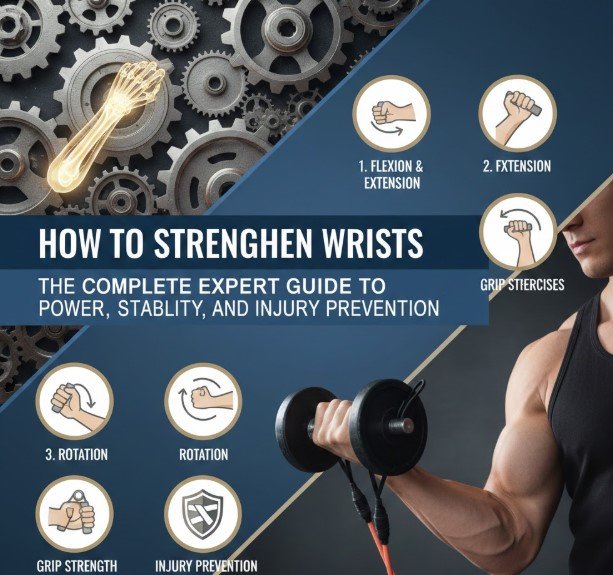
If you’ve ever felt wrist pain during push-ups, struggled with heavy lifts, or experienced discomfort while typing, you’ve probably wondered how to strengthen wrists effectively and safely. The wrists are small but incredibly complex joints that play a major role in nearly every upper-body movement—from lifting weights and performing yoga poses to boxing, gymnastics, and daily activities.
Weak wrists can limit your strength, compromise performance, and increase injury risk. On the other hand, strong wrists improve grip strength, joint stability, athletic output, and long-term joint health. Whether you’re an athlete, office worker, or fitness enthusiast, learning how to strengthen wrists correctly can transform your performance and prevent chronic pain.
Why Wrist Strength Matters for Performance and Longevity

The wrist joint connects the forearm to the hand through a network of small carpal bones, ligaments, tendons, and muscles. Because of this complexity, wrist stability depends heavily on muscular strength and neuromuscular control rather than just bone structure.
Strong wrists are not just about lifting heavier weights. They contribute to:
• Improved grip endurance
• Better force transfer during pressing movements
• Reduced strain on elbows and shoulders
• Enhanced balance in weight-bearing activities
• Lower injury risk in sports and daily life
Six Foundational Reasons to Strengthen Your Wrists
• Enhanced Joint Stability and Load Distribution
When you strengthen wrists, you improve the muscular support surrounding the joint. This reduces excessive joint translation under load, helping distribute forces more evenly. In activities like bench press or push-ups, stronger wrists prevent excessive extension and reduce ligament strain.
• Improved Grip Strength and Forearm Power
Grip strength is directly linked to wrist strength. Studies show grip strength correlates with overall upper-body performance and even general health markers. Stronger wrists enable better deadlifts, rows, and functional tasks like carrying heavy objects.
• Injury Prevention in Sports and Training
Athletes in boxing, gymnastics, calisthenics, and yoga often experience wrist overuse injuries. Structured strengthening improves tissue resilience and tendon capacity, decreasing the risk of sprains, tendonitis, and chronic pain.
• Better Performance in Weight Training
Weak wrists often limit pressing power. During heavy bench press or overhead press, wrist collapse reduces force output. Strengthening ensures proper alignment and efficient energy transfer from forearms to barbell.
• Reduced Chronic Pain from Repetitive Use
Typing, mouse use, and smartphone activity create repetitive stress. Targeted strengthening increases endurance and improves blood flow, reducing stiffness and overuse symptoms.
• Long-Term Joint Health and Mobility Preservation
With age, connective tissue elasticity declines. Strength training for wrists maintains joint mobility, supports cartilage health, and promotes longevity in physical activity.
Also Read:- How to Sew a Tie: The Complete Step-by-Step Guide for Beginners and Experts
Understanding Wrist Anatomy Before You Train
Before learning how to strengthen wrists, it’s important to understand how they function. The wrist joint is primarily composed of:
• Carpal bones
• Radius and ulna (forearm bones)
• Flexor and extensor tendons
• Supporting ligaments
Movements include flexion, extension, radial deviation, ulnar deviation, and rotation (pronation/supination via forearm).
Six Key Anatomical Insights for Safer Training
• Flexors and Extensors Must Be Balanced
Most people overuse flexors (gripping activities) and neglect extensors. Imbalance leads to pain and instability. Effective wrist strengthening exercises must target both sides equally.
• Tendon Strength Develops Slower Than Muscle
Tendons adapt more slowly than muscles. Progressive overload should be gradual to avoid tendonitis, especially for beginners.
• Neutral Alignment Is Critical Under Load
When lifting weights, wrists should remain neutral—not excessively bent backward. Strength training improves your ability to maintain this safe position.
• Forearm Muscles Drive Wrist Stability
The wrist itself has minimal muscle tissue. Stability largely comes from forearm musculature. That’s why strengthening wrists and forearms together is essential.
• Mobility Supports Strength Expression
Limited mobility restricts strength development. Gentle wrist mobility drills should accompany strengthening routines.
• Neuromuscular Control Prevents Injury
Coordination and proprioception (joint awareness) are crucial. Slow, controlled exercises enhance joint control and reduce injury risk.
Also Read:- How to Setup AirTag: The Complete Step-by-Step Guide for Beginners and Experts
How to Strengthen Wrists: Core Exercises That Work
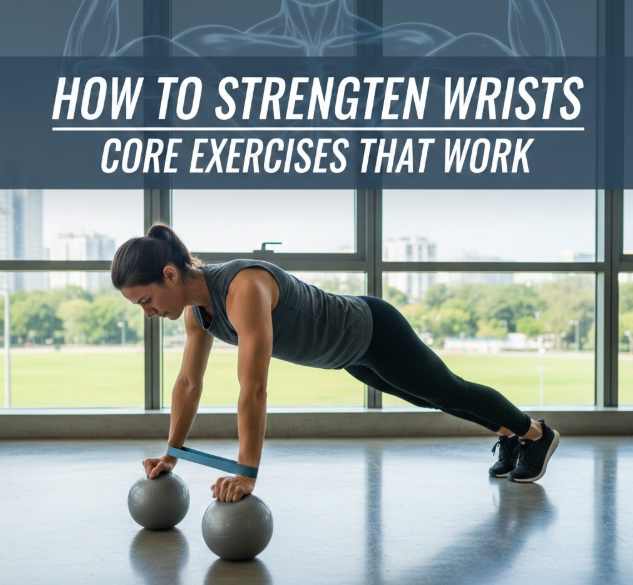
Now let’s break down practical, proven exercises that build wrist strength safely and efficiently.
Fundamental Wrist Strengthening Exercises
These movements form the base of any program focused on how to strengthen wrists.
• Wrist Curls (Flexion)
Using dumbbells or a barbell, rest forearms on a bench and curl the weight upward using only the wrists. This builds wrist flexors and improves grip support for pulling exercises.
• Reverse Wrist Curls (Extension)
Turn palms downward and lift the weight upward using the back of the forearm. This strengthens extensors—critical for joint balance and injury prevention.
• Farmer’s Carries
Hold heavy dumbbells and walk for distance or time. This trains grip, wrist stability, and forearm endurance simultaneously.
• Plate Pinches
Pinch weight plates together using fingers and thumb. This builds crushing grip strength and wrist endurance.
• Wrist Rotations with Dumbbells
Hold a light dumbbell vertically and rotate through pronation and supination. This strengthens rotational control and improves resilience.
• Resistance Band Deviations
Attach a band and perform radial and ulnar deviations. These movements enhance side-to-side wrist stability, often neglected in traditional training.
Also Read:- How to Make Pasta: The Complete Step-by-Step Homemade Guide
How to Strengthen Wrists at Home Without Equipment
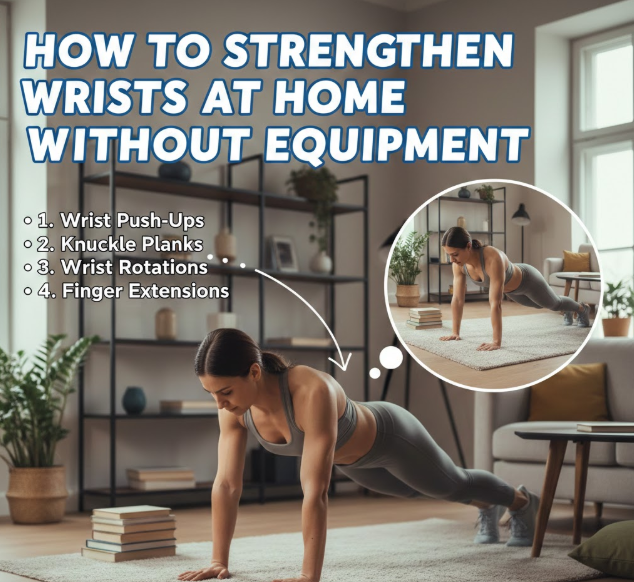
You don’t need a gym to build strong wrists.
Effective Home-Based Wrist Training
• Wall Push-Up Holds
Lean against a wall and hold your body weight through your hands. Gradually increase load angle to build tolerance.
• Kneeling Wrist Rocks
On all fours, gently shift body weight forward and backward over hands to improve mobility and strength.
• Isometric Palm Presses
Press palms together firmly and hold for 10–20 seconds. This activates stabilizing muscles.
• Fingertip Planks
Progress from knees to full plank on fingertips to develop strong intrinsic hand and wrist muscles.
• Towel Twists
Twist a rolled towel tightly in both directions to build rotational forearm strength.
• Water Bottle Wrist Curls
Use household items as resistance for flexion and extension movements.
Also Read:- How to Hem Pants: The Complete 2026 Guide for Beginners and Experts
How to Strengthen Wrists and Forearms Together
Forearm development is inseparable from wrist strength.
• Hammer Curls
Neutral grip curls strengthen brachioradialis and support wrist stability.
• Reverse Curls
Targets extensor chain, balancing flexor dominance.
• Thick Grip Training
Using thicker handles increases wrist stabilization demands.
• Dead Hangs
Hanging from a pull-up bar improves grip endurance and joint integrity.
• Wrist Roller Tool
Rolling weight via rope builds endurance and strength.
• Tempo Training
Slow eccentrics enhance tendon resilience and control.
Also Read:- How to Fill Out a Check: The Complete 2026 Step-by-Step Guide
How to Strengthen Wrists for Different Activities
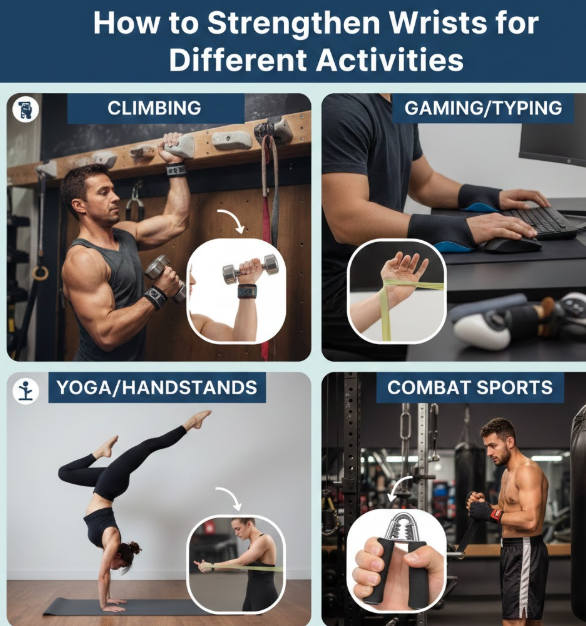
• Gradual weight-bearing progressions
• Palm elevation drills
• Controlled transitions
• Wrist mobility flows
• Active finger engagement
• Rest and recovery protocols
Also Read:- How to Make Ice Cream: The Ultimate Guide for Beginners & Experts
How to Strengthen Wrists for Boxing

• Knuckle push-ups
• Heavy bag alignment practice
• Wrist wraps for support
• Rotational forearm drills
• Grip endurance circuits
• Progressive impact exposure
Also Read:- How to Make Tea: The Complete Guide for Beginners and Connoisseurs
How to Strengthen Wrists for Calisthenics

• Parallette training
• Planche lean progressions
• False grip holds
• Slow eccentric push-ups
• Ring support holds
• Incremental load increases
Also Read:- How to Cut Your Own Hair: A Complete Guide for Beginners
How to Strengthen Wrists for Bench Press and Lifting
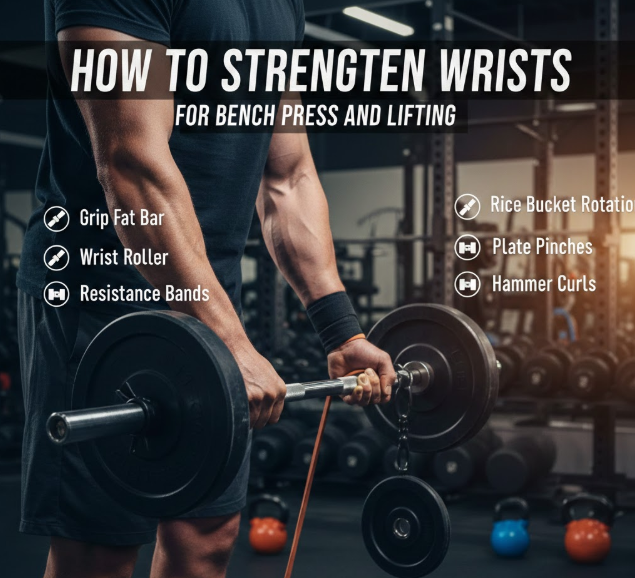
• Barbell alignment focus
• Wrist wraps strategically
• Heavy carries
• Accessory forearm training
• Neutral grip pressing
• Gradual overload tracking
Also Read:- How to Open a Can Without a Can Opener: The Ultimate Guide
How to Strengthen Wrists for Gymnastics
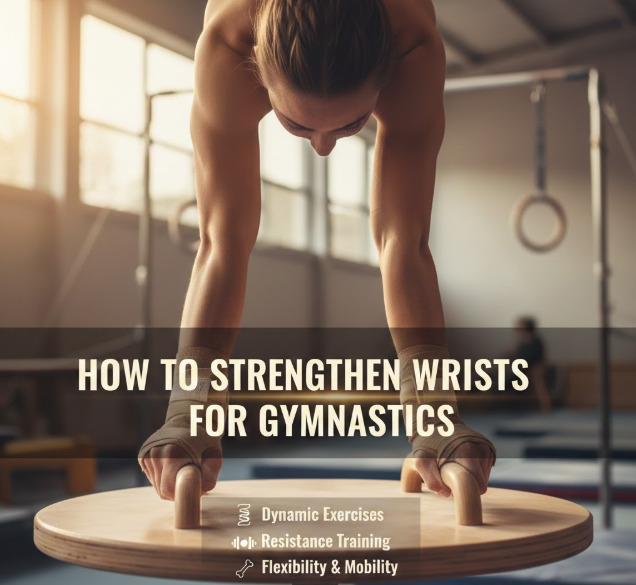
• Controlled handstand holds
• P-bar conditioning
• Hollow-body stability
• Wrist warm-up circuits
• Isometric holds
• Recovery mobility work
Also Read:- How to Bake a Cake: The Ultimate Step-by-Step Guide for Perfect Results Every Time
How to Strengthen Wrists Safely and Avoid Injury
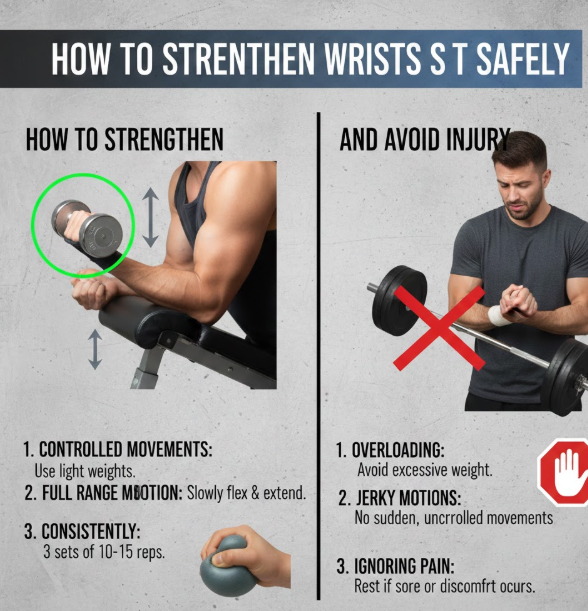
• Warm up thoroughly
• Progress gradually
• Train both flexors and extensors
• Avoid sharp pain
• Schedule recovery days
• Seek professional guidance if injured
Also Read:- How to Fix a Zipper: The Complete Guide for Every Clothing and Bag Issue
Sample 4-Week Wrist Strength Plan
Week 1–2: Light resistance, focus on control
Week 3: Moderate resistance, add carries
Week 4: Increase volume, introduce sport-specific drills
Train 2–3 times per week, 3 sets per movement.
Also Read:- How to File a Tax Extension: Complete Guide for Individuals and Businesses
Conclusion
Learning how to strengthen wrists isn’t just about lifting heavier weights—it’s about protecting your joints, enhancing performance, and preventing long-term injuries. By combining targeted strengthening exercises, sport-specific adaptations, and proper recovery strategies, you can build wrists that are resilient, powerful, and pain-free.
Consistency is key. Train smart, progress gradually, and prioritize balance between mobility and strength.
Strong wrists don’t just support your workouts—they support your life.
FAQs
How often should I train my wrists?
2–3 times per week with adequate recovery.
How long does it take to see results?
Most people notice improved endurance in 3–4 weeks.
Can wrist strengthening reduce pain?
Yes, when caused by weakness or imbalance—but consult a medical professional for persistent pain.
Should I use wrist wraps?
Use them strategically for heavy lifts, but don’t rely on them entirely.
Are push-ups enough to strengthen wrists?
They help, but targeted flexion and extension work is essential.
For More Visit Alaikas.com